%20(1500%20.png)
Why Health and Wellness Marketing Feels Harder Than It Should

If you run a health or wellness business and your marketing feels like it should be working better than it is, there is usually a reason.
And it is often not just effort.
A lot of practitioners are showing up consistently.
They are posting. Educating. Building visibility. Sometimes running ads.
But inquiries still feel inconsistent, slower than expected, or harder to generate than the effort seems to justify.
That is often because health and wellness marketing asks for a different kind of trust than many other service categories.

Before you keep reading, check your lead path.
If visibility is not turning into enough inquiries, start with the Funnel Fix Checklist.

Why this category is different
People are not just choosing a service.
They are often choosing someone they need to trust with:
their health
their body
their mental wellbeing
a personal challenge they may already feel vulnerable about
That is a bigger decision.
It usually takes more trust, more reassurance, and a clearer path before someone feels ready to book.
That is why generic marketing advice often falls flat in this category.
This is also why a more thoughtful, strategy-first approach tends to work better for health and wellness businesses, especially when the goal is to build trust before asking for action.
If you want a closer look at how I approach this with wellness clients, you can explore that here.
What trust in the path looks like for health and wellness
For health and wellness businesses, trust is rarely built in one step.
It is usually built through a series of smaller signals working together.
That can include:
clear language that quickly explains what you help with
practitioner presence that makes the business feel real and credible
educational content that reduces uncertainty
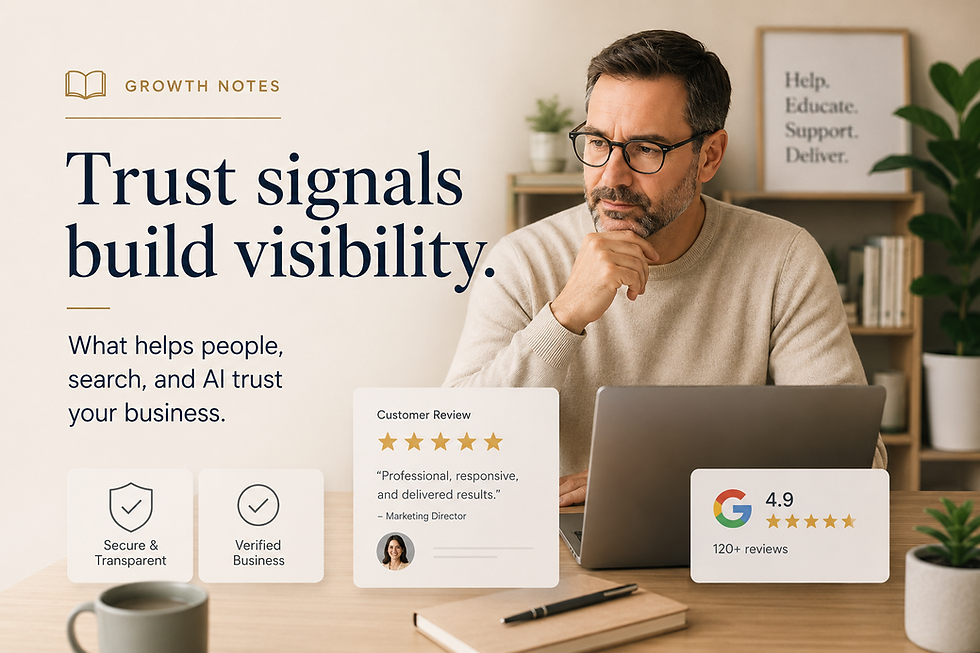
testimonials or proof that help someone feel safer moving forward
a website or booking page that feels calm, clear, and easy to navigate
a next step that matches the level of trust someone has built so far
If that trust-building layer is weak, the marketing may stay active without converting the way it should.
Why effort is not always the issue
This is the part many practitioners miss.
You can be doing a lot right on the surface and still struggle with conversion if the path is asking for action before enough trust exists.
That might mean:
the booking ask is too direct too soon
the content educates, but does not guide someone toward the next step
the page does not answer enough of the unspoken questions
the messaging sounds nice, but does not make the value feel specific or believable
the process feels abrupt instead of thoughtful
When that happens, it is easy to assume the answer is more consistency.
Sometimes the better answer is a clearer path.
What to check first
Before pushing harder, it helps to ask:
Does the marketing build trust before it asks for action?
Is the practitioner visible enough in the customer journey?
Does the page make the next step feel safe and worthwhile?
Is the message specific enough to the problem people are trying to solve?
Am I asking someone to book before they are ready?
Those are the kinds of questions that usually reveal where the real friction is.
Final takeaway
Health and wellness marketing is often harder because the decision is more personal.
That means the path matters more.
If someone does not feel enough trust, certainty, or relevance along the way, the effort behind the marketing can still underperform.
The goal is not just to be seen.
It is to build a clearer path from “I found you” to “I feel ready to book.”
If that feels like the issue in your business, start with the Funnel Clarity Checklist. It is a practical way to identify what may be missing in the path before you add more effort.
Back to all Growth Notes.


Comments